NO. 003 · Technique
Dough Hydration Explained for Home Bakers
What 60%, 70%, and 80% hydration feel like on the bench, why volume cups mislead, and how stretch-and-folds tame wet dough.
Published 2026-11-17 · BAKER'S MATH · HANDLING
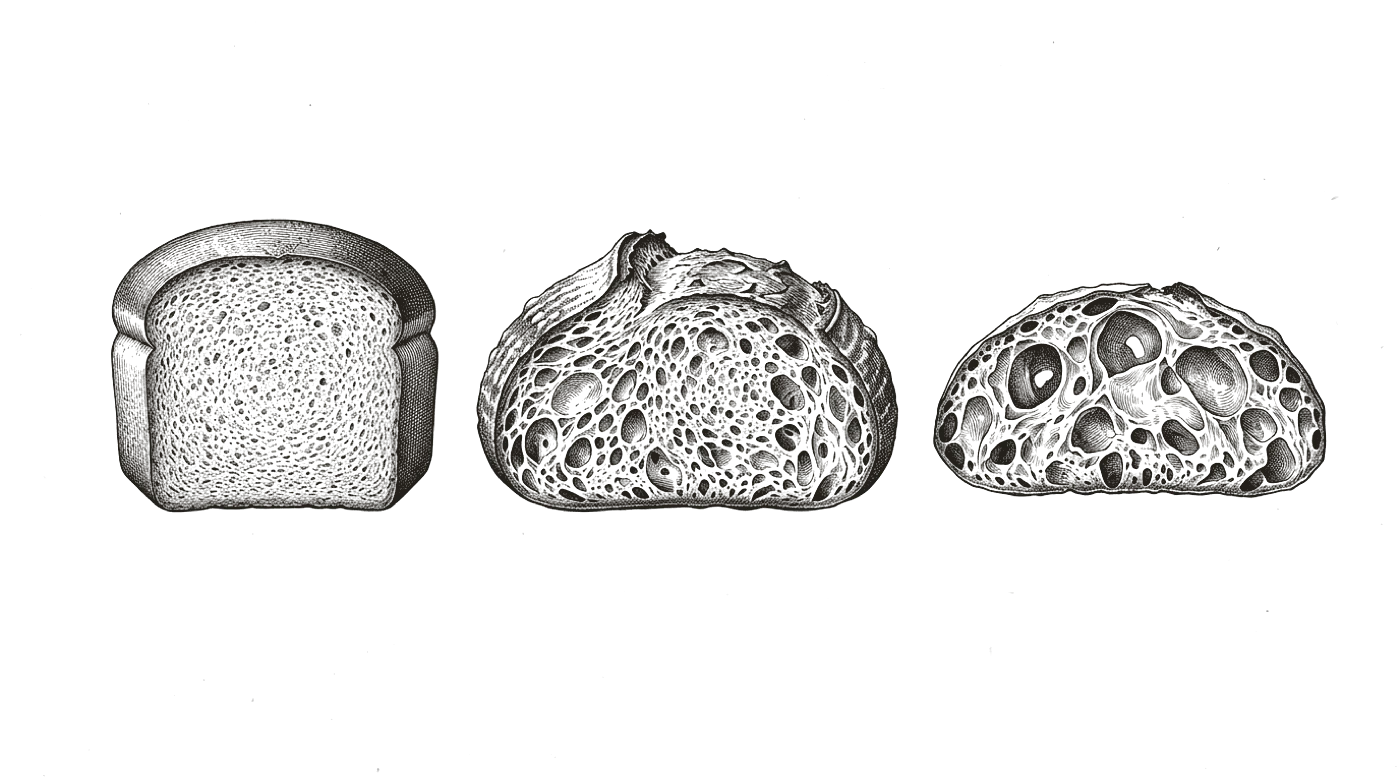
Smooth, non-sticky, easy to roll; yields tight, even sandwich crumb.
Supple and slightly tacky; holds its shape on parchment with tender open alveoli.
Loose and extensible; needs bowl coil-folds and builds glossy, custardy crumb.
What hydration percentage actually measures
In baker's math, total flour weight is always 100%. Divide water weight by flour weight to get hydration: 350 g water ÷ 500 g flour = 70% hydration. If you include a 100%-hydration sourdough starter, half of that starter's weight is flour and half is water, nudging true hydration upward.
Why you should match water to your flour, not chase 85%
High-protein bread flours (about 12%–13% protein) and thirsty whole grains absorb more water cleanly than all-purpose flour (in the US usually about 10%–12% protein). Pouring 80% water into a lower-protein flour gives a slack dough that spreads flat on the hearth.
Test 68%–72% first, watch how cleanly the dough releases from your bowl after two sets of stretch-and-folds, and add extra water only in 2% increments on future bakes.
References & Further Reading
- King Arthur Baking — Baker's Percentage Reference (baker's math: every ingredient as a percentage of flour weight)
- King Arthur Baking — Protein percentage in flour: Why it matters (protein content by flour type and how it affects gluten)
- Utah State University Extension — Enjoy Yeast Breads, Both Plain and Fancy (FN 283) (wheat proteins form gluten when water is added)